Why Representation Matters: What Happens When Girls See Women Who Look Like Them Leading
How seeing women in positions of power changes what girls believe is possible, and why African women's visibility in leadership matters for the next generation.
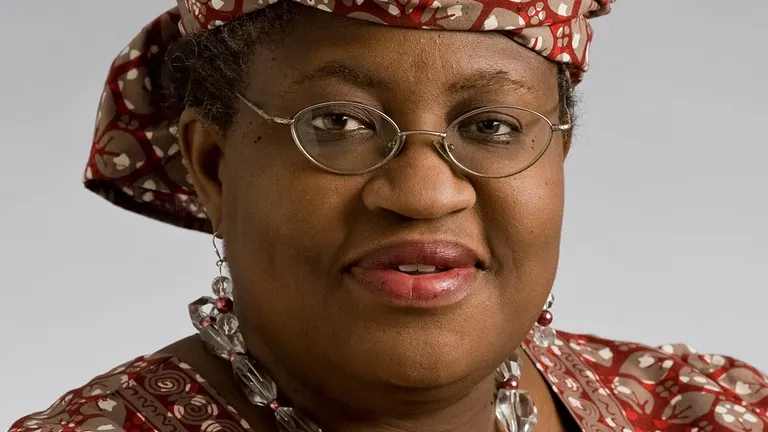
When Ellen Johnson Sirleaf became Africa's first elected female head of state in 2006, something shifted. Not just in Liberia, but across the continent. Girls in classrooms, women in markets, and young professionals in offices saw something they had never seen before: a woman who looked like them running an entire country.
That is the power of representation. It is not just about who holds power. It is about who gets to imagine themselves holding it.
What we mean by representation
Representation means seeing people like yourself in positions of influence, leadership, and visibility. It means seeing women in government, in science, in business, on screen, and in textbooks. And not just as side characters or exceptions, but as people who belong there.
For young people especially, representation shapes what feels possible. If you have never seen a woman lead a country, it is harder to believe that you could. If every scientist you learn about in school is a man, it is natural to assume science is not for women. These assumptions are not based on ability. They are based on what you have been shown.
The saying "you cannot be what you cannot see" is simple, but it captures something real. Visibility creates possibility.
What the research shows
This is not just a feel-good idea. Studies have consistently shown that representation has measurable effects.
Research from the World Bank found that in Indian villages where women were elected as leaders through a quota system, parents became more ambitious for their daughters. Girls in those villages spent more time in school and were less likely to be assigned to only household work. The presence of a woman in charge literally changed what families expected for their girls.
A study in the United States showed that when girls saw female political candidates on television, they were more likely to say they were interested in politics and more likely to believe they could run for office one day.
In Africa, the African Development Bank has reported that countries with more women in leadership tend to invest more in education and healthcare, which benefits entire communities.
The pattern is clear: when women lead, the next generation of girls thinks bigger.
African women who changed what was possible
Africa has no shortage of women who broke through barriers and, in doing so, expanded what every girl after them could imagine.
Miriam Makeba became one of the most famous musicians in the world at a time when Black South African women were expected to be invisible. She used her voice not just to sing but to speak against apartheid on global stages. Young girls across Africa saw a woman who refused to be silenced, and it mattered.
Ngozi Okonjo-Iweala became the first woman and the first African to lead the World Trade Organisation. For every girl in Nigeria or anywhere on the continent who has been told that economics or global leadership is "not for women," her appointment was a direct rebuttal.
Wangari Maathai was told that a woman had no business getting a PhD in biology in East Africa. She got one anyway, then went on to win the Nobel Peace Prize. Her life showed girls that there is no ceiling they are required to accept.
Leymah Gbowee organised women across religious lines to demand peace in Liberia during a brutal civil war. She showed that women do not have to wait for men to fix things. They can lead the way to peace themselves.
Each of these women made it easier for the next generation to believe that they belong in any room, at any table, in any role.
The cost of being invisible
When representation is absent, the damage is quiet but real.
Girls who never see women in leadership positions internalise the idea that leadership is not for them. Not because anyone tells them directly, but because absence sends its own message. If the textbooks, the news, the political stage, and the boardroom are all filled with men, the unspoken lesson is that power has a gender, and it is not female.
This affects career choices, self-confidence, and ambition. Research consistently shows that girls underestimate their abilities compared to boys, even when their actual performance is the same or better. Part of that gap comes from not seeing enough women succeeding in the areas they are interested in.
And it is not just about gender. It is about seeing women who share your background, your skin colour, your language, your experience. An African girl seeing an African woman lead the World Trade Organisation hits differently than seeing a woman from a completely different context do the same thing. Both matter, but there is something uniquely powerful about seeing yourself reflected specifically.
Representation is not just about the top
When we talk about representation, we tend to focus on presidents, CEOs, and Nobel Prize winners. Those examples are important. But representation also matters in everyday life.
A girl seeing a female teacher who is passionate about mathematics might decide to study maths. A young woman seeing a female mechanic in her neighbourhood might realise that career is open to her. A teenager seeing her mother start a business might grow up believing that women can create wealth on their own terms.
Representation at every level creates a staircase. Not every girl needs to see a president to feel inspired. Sometimes she just needs to see a woman one step ahead of her, doing the thing she was told she could not do.
What young people can do
Seek out stories of women. Do not wait for the curriculum to show you. Find the stories yourself. This platform exists for exactly that reason. Learn about the women who built the path you are walking on.
Be representation for someone else. If you are a girl who is good at science, speak up about it. If you are a boy who supports equality, say so. When younger kids see you breaking stereotypes, it changes what they think is possible.
Challenge what you are shown. When your history class only covers male leaders, ask about the women. When the media only highlights men in a particular field, look for the women who are also there. They almost always exist. They are just less visible.
Share the stories. When you learn about an incredible woman, tell someone. Post about her. Talk about her at school. Representation spreads when people spread it.
What to take away
- Representation means seeing people like yourself in positions of influence and leadership.
- When girls see women leading, they are more likely to believe they can lead too. This is backed by real evidence.
- African women like Ellen Johnson Sirleaf, Ngozi Okonjo-Iweala, and Wangari Maathai have expanded what the next generation believes is possible.
- The absence of representation sends a quiet but powerful message that limits girls' ambitions.
- Representation matters at every level, not just at the top.
- You can be part of the solution by seeking out women's stories, sharing them, and being representation for someone younger than you.
Every time a girl sees a woman who looks like her doing something extraordinary, a door opens in her mind. That door may never close. And what walks through it could change the world.
Cite this page
HerStory Africa. (2026). Why Representation Matters: What Happens When Girls See Women Who Look Like Them Leading. HerStory Africa. Retrieved September 10, 2026, from https://herstoryafrica.com.ng/articles/why-representation-matters