Why Educating Girls Changes Everything
How investing in girls' education transforms families, communities, and entire nations, with real stories from across Africa.
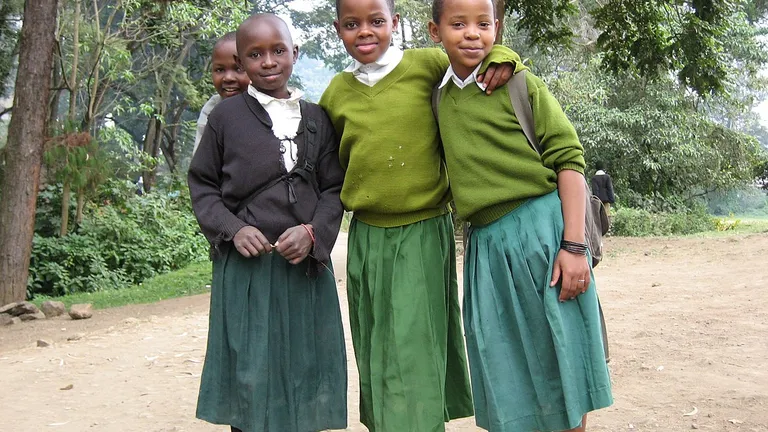
There is a saying that gets repeated often: "If you educate a man, you educate an individual. If you educate a woman, you educate a nation." It sounds like one of those things people say to be inspirational. But it is actually backed by decades of research and real-world evidence. Educating girls is one of the most powerful things any society can do.
What happens when girls go to school
When a girl stays in school, the effects reach far beyond her own life. Here is what the data consistently shows.
She earns more. Every additional year of schooling a girl completes increases her future earnings by up to 20 percent. That means more money going back into her family, her community, and her local economy.
Her children are healthier. Educated mothers are more likely to seek healthcare for their children, vaccinate them, and ensure they are well nourished. Children of educated women are twice as likely to survive past the age of five.
She has fewer children, by choice. Girls who stay in school tend to marry later and have children when they are ready. This is not about population control. It is about women having the power to decide what happens with their own bodies and their own lives.
Her community benefits. When women earn income and participate in decision-making, families invest more in education, health, and housing. The effect multiplies across generations.
This is not theory. These are patterns observed across Africa and around the world by organisations like the World Bank, UNESCO, and the African Union.
The barriers that still exist
If educating girls is so powerful, why are millions of African girls still out of school? The reasons are many, and they overlap.
Poverty. When a family cannot afford to send all their children to school, girls are often the first to be pulled out. The assumption is that boys need education for work while girls will eventually marry. This thinking costs families and communities far more in the long run than school fees ever would.
Early marriage. In parts of West and Central Africa, girls as young as 13 or 14 are married off, sometimes to settle debts or strengthen family alliances. Once married, their education almost always stops. Gambo Sawaba spent much of her life fighting against forced marriage in northern Nigeria, and the problem she confronted in the 1950s has still not fully disappeared.
Safety. Girls who face harassment on the way to school or inside the classroom are less likely to keep attending. When schools lack basic facilities like separate toilets, older girls often drop out once they start menstruating. These might sound like small issues, but they end the education of millions of girls every year.
Cultural attitudes. In some communities, there is still a belief that too much education makes a girl "unmarriageable" or too independent. These beliefs are changing, but slowly.
African women who fought for the right to learn
The struggle for girls' education in Africa is not new. Women have been fighting for it for generations.
Charlotte Maxeke became the first Black South African woman to earn a university degree, graduating from Wilberforce University in Ohio in 1901. She came back to South Africa and spent her life advocating for education and rights for Black women and men. At a time when most Black South Africans were denied meaningful education, she proved what was possible.
Funmilayo Ransome-Kuti was a trained teacher who opened schools for women and girls in Abeokuta, Nigeria. She understood that education was the foundation for everything else, including political power. She did not just teach reading and writing. She taught women to understand their rights.
Wangari Maathai became the first woman in East and Central Africa to earn a doctoral degree. She went on to win the Nobel Peace Prize. Her story is a reminder of what becomes possible when a girl is given the chance to learn without limits.
These women did not just benefit from education. They used their education to open doors for others. That is the ripple effect in action.
What about boys?
Talking about girls' education does not mean boys do not matter. Of course they do. But the reality is that in most parts of the world, and certainly across much of Africa, boys have historically had better access to schooling than girls. The gap has been closing in many countries, but it is still there.
Focusing on girls' education is about addressing an imbalance, not creating a new one. When girls catch up, everyone benefits. Boys gain sisters, partners, mothers, and colleagues who are educated and empowered. Communities get stronger. Economies grow. The whole picture improves.
What young people can do
You do not need to run a charity or change a law to make a difference. Here are things that matter at every level.
Challenge the thinking around you. When someone says a girl does not need to go to university because she will "just get married," push back. Ask why marriage and education have to be opposites. They do not.
Support the girls in your life. If you have a sister, a cousin, or a friend who loves learning, encourage her. Sometimes a girl stays in school not because of a policy but because someone around her believed in her.
Stay informed. Know the facts. When you understand why girls' education matters, you can explain it to others. Knowledge spreads.
Value your own education. If you are a girl reading this, know that your education is not just for you. It is for your future family, your community, and the generation that comes after you. Every exam you sit, every book you read, every question you ask in class is part of something bigger than you realise.
What to take away
- Educating girls is one of the most effective ways to reduce poverty, improve health, and strengthen communities.
- Millions of African girls still face barriers to education, including poverty, early marriage, safety concerns, and outdated cultural attitudes.
- African women have been fighting for the right to learn for over a century. Their efforts changed the course of history.
- Supporting girls' education does not take away from boys. It lifts everyone.
- You can make a difference right now by challenging unfair thinking and supporting the learners around you.
Every girl who stays in school is rewriting the story of what is possible. And that story belongs to all of us.
Cite this page
HerStory Africa. (2026). Why Educating Girls Changes Everything. HerStory Africa. Retrieved September 10, 2026, from https://herstoryafrica.com.ng/articles/why-educating-girls-changes-everything