Why Economic Independence Changes a Woman's Life
How having your own money transforms a woman's choices, safety, and future, and why financial empowerment is at the heart of gender equality.
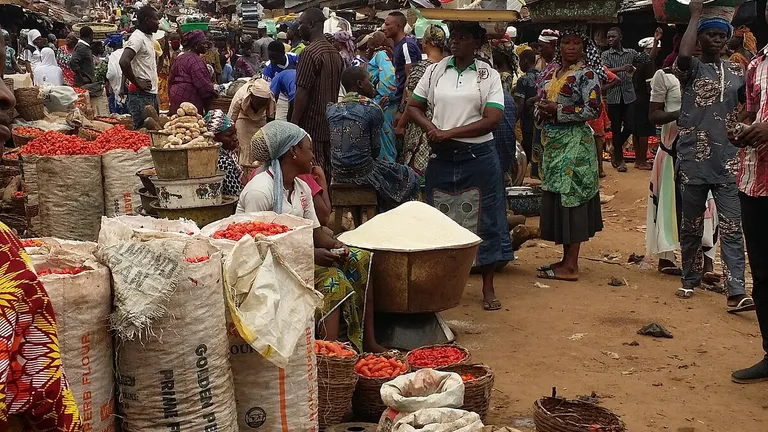
There is a pattern that shows up in almost every conversation about women's rights: at some point, the conversation turns to money. Not because women's rights are about money, but because money determines how much freedom a person actually has. A woman who earns her own income makes different choices than a woman who depends entirely on someone else. She stays in relationships because she wants to, not because she has no other option. She sends her children to school because she can afford to. She speaks up because her survival does not depend on someone else's approval.
Economic independence is not the only thing women need. But without it, almost nothing else is fully possible.
What economic independence means
Economic independence means having the ability to meet your own financial needs without depending on another person. It means earning income, controlling your own money, and making financial decisions for yourself.
This does not mean a woman must earn a million dollars or run a company. It means she has enough agency over her own finances that she is not trapped by poverty, by a partner, or by a family structure that treats her earnings as someone else's property.
For many women across Africa and the world, this level of independence is still not a given. Cultural norms, legal barriers, limited access to education, and discriminatory employment practices all stand in the way.
How money connects to freedom
It is easy to talk about women's rights in abstract terms. Education, political participation, bodily autonomy. These are all essential. But each of them becomes much harder to access without money.
Education costs money. Even where school is free, uniforms, books, transport, and meals are not. Families that struggle financially often pull girls out of school first because they see a faster return on investing in boys' education.
Leaving an abusive situation requires money. One of the most common reasons women stay in violent relationships is that they have nowhere else to go and no way to support themselves. Financial dependence becomes a cage. When a woman earns her own income, she has options.
Political participation requires resources. Running for office, travelling to organise, even taking time off work to attend a community meeting, all of these cost something. Women with no economic base are locked out of civic life in ways that are rarely discussed.
Healthcare requires money. From maternal care to contraception to treatment for illness, women who do not control their own finances often cannot make decisions about their own health.
Economic independence does not solve everything. But it unlocks the door to almost everything else.
African women and economic power
The irony is that African women have always been economically active. In many West African societies, women dominated trade. Market women in Nigeria, Ghana, Togo, and Benin ran vast commercial networks and held significant economic power.
Margaret Ekpo came from a market trading background and used her economic knowledge to fight for women's political participation in Nigeria. She understood that money and power were connected and that women who controlled their own income could demand a seat at the table.
Ngozi Okonjo-Iweala led Nigeria's economy as Finance Minister and went on to lead the World Trade Organisation. Her career is proof that women belong in the highest levels of economic leadership.
Dora Akunyili transformed Nigeria's drug regulation system as head of NAFDAC, fighting counterfeit pharmaceuticals that were killing people. Her work had enormous economic implications for public health and consumer safety across the country.
But for every woman who has broken through, there are millions who are held back by systems that deny them access to credit, land, inheritance, and fair wages.
The barriers that remain
Land ownership. In many African countries, women cannot legally own or inherit land. Since land is the primary economic asset in rural communities, this means women can work the land their entire lives and own none of it. When a husband dies, the land often goes to his male relatives, leaving the widow and her children with nothing.
Access to credit. Women entrepreneurs across Africa consistently report difficulty getting loans. Banks and microfinance institutions often require collateral that women do not have, or they require a male co-signer. This makes it harder for women to start or grow businesses.
Unpaid labour. Women across the continent perform the vast majority of unpaid care work: cooking, cleaning, childcare, elder care, fetching water, gathering firewood. This work is essential to every economy but is not counted in GDP and is not compensated. It also limits the time women have available for paid work.
Wage gaps. Where women do work for pay, they often earn less than men for the same work. This is true in formal employment and in informal markets. The gap is driven by discrimination, by the devaluation of work that women typically do, and by the interruptions in women's careers caused by pregnancy and caregiving.
Legal restrictions. In some countries, married women still need their husband's permission to open a bank account, register a business, or sign a contract. These laws are relics of colonial-era legal systems that treated women as dependents, and they remain on the books in more places than most people realise.
What changes when women earn
The effects are well documented and they are significant.
When women earn their own income, they invest more of it in their families than men do on average. Studies by the World Bank show that women reinvest up to 90 percent of their earnings in their families, compared to 30 to 40 percent for men. This means better nutrition, better education, and better health for children.
When women have economic power, domestic violence decreases. Not because money magically solves relationship problems, but because financial independence gives women the ability to leave situations that are harmful.
When women participate in the economy on equal terms, national GDP grows. The African Development Bank has estimated that closing the gender gap in employment and entrepreneurship could add billions of dollars to the continent's economy annually.
Economic independence does not just change a woman's life. It changes the life of everyone around her.
What young people can do
Learn about money. Financial literacy is not taught in most schools, and it should be. Understand how savings, budgets, and investments work. This knowledge is power regardless of your gender.
Support women-owned businesses. When you buy from a woman running her own enterprise, you are helping build someone's economic independence. It matters.
Challenge unfair norms. If your community treats women's earnings as belonging to their husbands or families, question that. If women in your area cannot inherit property, talk about why that is wrong. Norms change when enough people refuse to accept them.
Think about your own future. If you are a girl, plan for your own financial independence. Not as a backup plan, but as a core part of your life. If you are a boy, expect the women in your life to have their own economic power and support them in building it.
What to take away
- Economic independence means having the ability to earn, control, and manage your own money. For many women, this is still not a reality.
- Money connects to every other right: education, safety, health, and political participation all require financial resources.
- African women have always been economically active, but legal barriers, cultural norms, and structural discrimination continue to hold millions back.
- When women earn, families are healthier, children are better educated, and communities are stronger.
- Financial literacy, supporting women-owned businesses, and challenging unfair norms are all ways young people can contribute to change.
A woman with her own money is a woman with choices. And a world where every woman has choices is a world that works better for everyone.
Cite this page
HerStory Africa. (2026). Why Economic Independence Changes a Woman's Life. HerStory Africa. Retrieved September 10, 2026, from https://herstoryafrica.com.ng/articles/why-economic-independence-changes-everything